


From Silvopasture to Self-Care: A Look Inside Good Trouble Grove

Written by Erin Lenninger, WFU Conservation Coordinator
The Farmer-to-Farmer Coordinator Program
In late 2024 WFU partnered with The Nature Conservancy (TNC) to build a new program for farms in the Lake Michigan basin. The focus of this program is for farmers to host educational events that facilitate peer learning and build networks in the regenerative agriculture community. In March of 2026, three WFU members were selected as Farmer to Farmer Coordinators and received funding to plan and host events in 2026. WFU and TNC staff helped connect the farmers and regularly meet to help plan, debrief, and share lessons learned. This post will highlight one of those farms - Good Trouble Grove in Green Lake County.
WFU Members Shelly Rothman and Jorg Diekmann own Good Trouble Grove right outside Green Lake, Wisconsin and are dedicated to turning this one-time horse farm into a community-focused regenerative agroforestry farm. Specifically, one that improves all ecosystems and produces unique and emerging crops such as hazelnuts, chestnuts, pecans, paw paws, and persimmons.
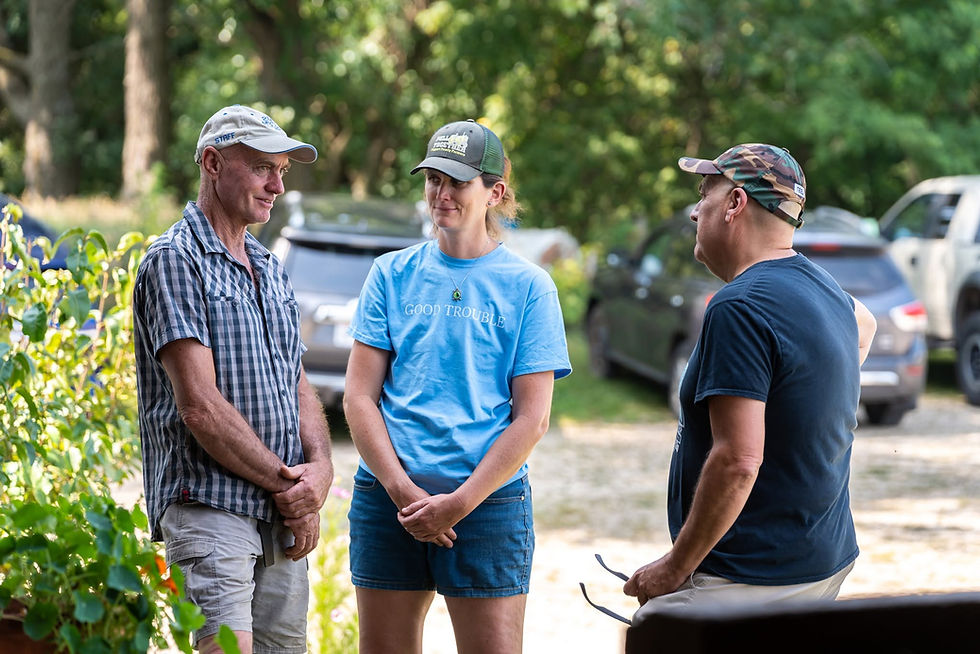
This family is not only personally excited about this type of agriculture, they want to share it with others. Shelly met Jorg, a grass-fed cattle farmer, in Namibia while earning her UW degree in conservation biology. After marrying, starting a family and living in Namibia for nearly a decade, the couple decided to come back to the States. One of the first things they did was to join WFU.
“We had been members of the local farmers union in Namibia, and I figured WFU would be a good way to get involved in the ag community in our new home. When I read online about the initiatives of WFU, they were so in line with our own values, I signed up that day and we’ve been members ever since,” Shelly said.
Upon their return, they realized just how hard it was to secure land and start a farm. Undeterred, they not only saved money, bought a farm, and built relationships, Shelly also started a grassroots non-profit, Foxhead Regenerative Agriculture Project (FOXRAP). The mission of this organization is to build a vibrant, resilient community connected around healthy food, farms, and natural resources.
Once settled at Good Trouble Grove, they planted hundreds of fruit and nut trees, raised livestock to graze between tree rows, and began cultivating space to bring in the community. A large barn on the property has been transformed to easily host events. The Farmer-to-Farmer Coordinator Program (F2F) provided them some funding and support to continue to build out a series of gatherings on the farm where local growers and producers can meet and learn from each other.
Their first event was the Green Lake Farmers Coalition Annual Meeting held on August 20. This gathering was exciting in that it featured a producer-led watershed group (PLWG) the Green Lake Farmers Coalition newly formed this year. Like other PLWGs, attendees came to hear presentations from county conservation staff, Extension staff, and from fellow producers. This coalition currently provides incentive payments for single-species and multi-species cover crops, as well as soil sampling.
The annual meeting was well attended with around 35 people in the barn listening and asking questions. PLWGs are focused on farmers teaching each other, making decisions, and leading in their watershed. Similarly, the F2F program’s aim is to allow farmers with experience and passion for education to lead in their own areas of expertise. Shelly and Jorg augmented this PLWG meeting with a small vendor fair, a local meal, and tour of their agroforestry farm. Lunch was catered by a local restaurant, Adam’s Rib, served inside the barn with long tables, perfect for networking and getting to know each other.
After lunch, the group was invited out to walk around the farm and learn up close about the silvopasture practices that Shelly and Jorg have brought to the farm. The group had many questions about the nut species: “Are they a tree or a shrub or bush? How big do they get? How long will it take for them to produce?” They were also very curious about pest pressures and pleasantly surprised to learn that a 3D deer fence has been able to protect them very well - they've had zero issues since installing it.

They also showed the companion plantings that are used between the nut trees, including comfrey, serviceberry, and nitrogen-fixing plants. They are planting several unique crops for Wisconsin working to ensure as much success as possible. Moisture-loving paw paws can be planted in the more riparian area, helping to filter water and trap sediment. Northern-hardy varieties of chestnuts, hazelnuts, and pecan are purchased from Grimo Nut Nursery, a supplier in Ontario, Canada. They also uniquely start many of their trees from seed and harden them to the current climate in Green Lake County. When asked if they are worried about a market for such crops, they replied that education is a big part of their job, and when people learn about these foods, they will be best positioned to supply them!

Fellow WFU member and Savannah Institute staff member, Eleanor Johnson, was at this event as a resource organization and a personal partner to Shelly and Jorg on their agroforestry journey. She shared, “They are very thoughtful and passionate about welcoming the community into their space and teaching them about the types of regenerative agriculture they practice.” She said she considers them creative and experimental farmers who have been great to work with. The connections made and the imagination sparked from this event is the goal of not only the F2F program but the ethos of Good Trouble Grove overall.
Soil and Self
Good Trouble Grove’s second gathering in the F2F Program took the regenerative practice of looking holistically at a farm operation and expanded that perspective to the farmer themselves. "Soil & Self: A holistic health workshop for farmers and land stewards" was intended for any caregiver of the soil to pause, gather with others, look inward, and learn tools for overall wellbeing. Shelly and Jorg brought in a local herbalist and homesteader, Amanda Anderson, to teach a workshop on wellbeing with the intention that taking better care of ourselves allows us to take better care of the land. The morning started with breathwork - the practice of breathing intentionally and rhythmically (sometimes to music!) - taught by Andrea Ivory, a certified breathwork instructor. The 10 attendees then moved through an individual workbook that gave space for self-reflection and problem solving to find practical next steps to avoid burnout, identify personally specific areas of growth, and ensure that those caretaking the land can continue to do so for a long time!
Attendees were able to break for a lunch featuring food grown on the property, followed by a walking tour of the farm. Shelly shared her favorite places on the farm to slow down, use all senses, and to remember the mission and “why” of their space - not to get too caught up in any one aspect or challenge. After the tour, everyone gathered again in the barn to continue working through their wellbeing plans and share with others. The small group of people allowed for an intimate and safe space to discuss struggles and joys that are unique to farmers and stewards of the land. This local group shared upcoming opportunities to gather and demonstrated a desire to stay connected moving forward - an important part of social wellbeing and health.
Good Trouble Grove intends to continue as this communal place for connection into the future. Check out their farm’s events page to see upcoming opportunities including a casual and German-inspired Stammtisch and a hands-on agroforestry workshop sometime next year.


Comments