


Balancing Health and Happiness: Why Health Insurance Options Fall Short for Wisconsin Family Farms
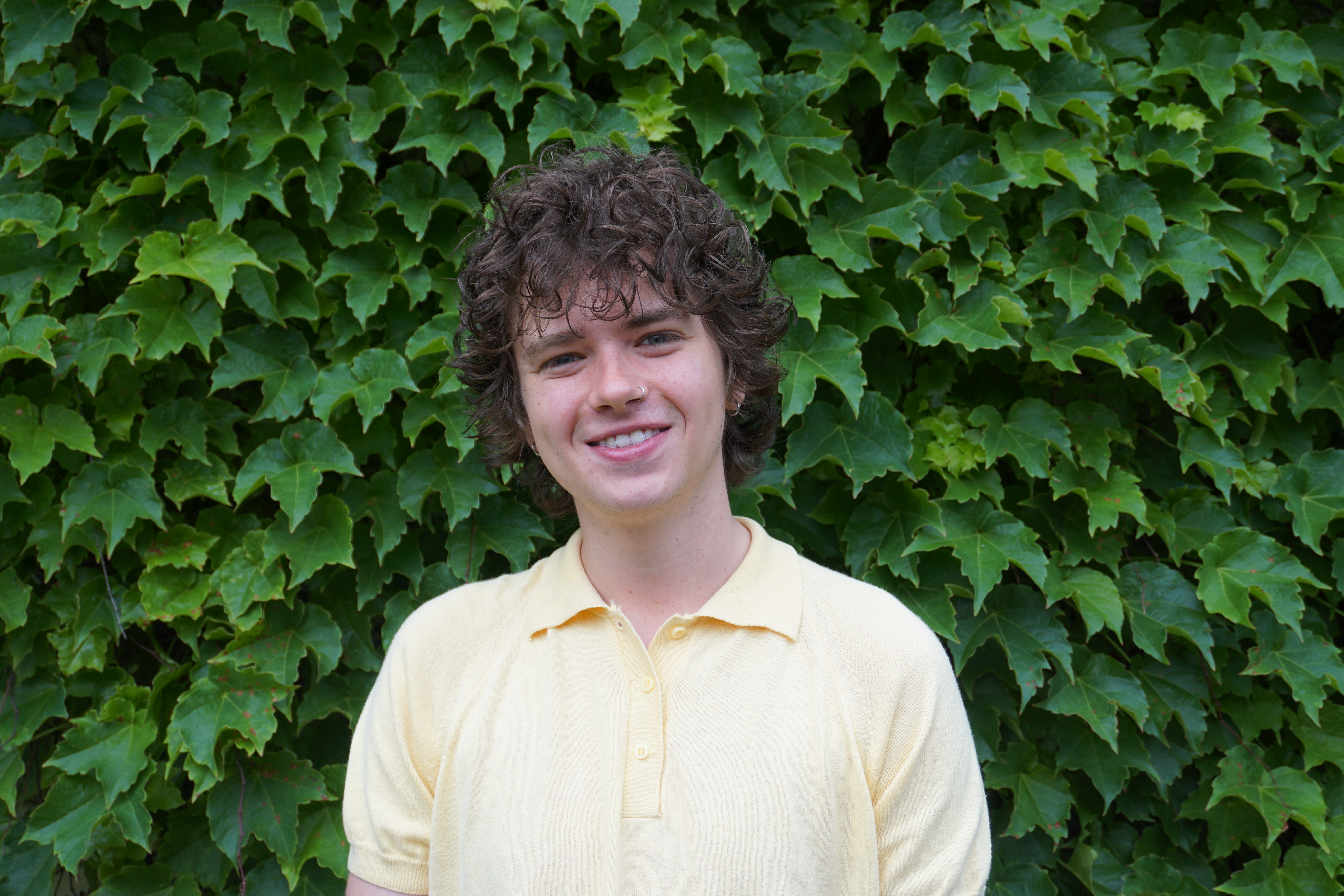

Robyn Calvey and Noah Ryan both came to farming with a love for the land, a family connection, and a desire to grow local food. With a combined total of more than 25 years of farming experience, Robyn and Noah know what it takes to succeed as small-scale farmers. They’re also all too familiar with the financial and health tradeoffs that many farmers face in doing what they love. At Park Ridge Organics, and on farms around the state, farmers and farmworkers must balance fair wages with healthcare access, profitability with size, and the desire to follow one’s passions with the realities of meeting basic needs.
Park Ridge Organics is a diversified vegetable farm located in Fond du Lac, Wisconsin. The farm primarily grows for wholesale customers and supplies a farm store on the property that’s seasonally open to the public and available online. Robyn’s parents originally bought the farm in the 1980s and by 2003 had expanded into direct-to-consumer and wholesale production. Robyn returned to the farm after a career in environmental advocacy in 2005 and took over the business in 2013.
Each year, Robyn has a number of employees that assist with production, farm store management, deliveries, and more. This spring, Robyn welcomed her brother-in-law Noah back to the farm as a full-time employee. Noah first began working for Robyn at Park Ridge Organics when he was 18. He left the farm to pursue a degree in Environmental Studies at UW Oshkosh, which eventually landed him an office job as a county health inspector. In August 2025, Noah was diagnosed with Hodgkin's Lymphoma, an event Noah felt was a catalyst that pushed him back to the farm for the sake of his quality of life, even if it meant compromising the health insurance benefits that came with his public sector job.

Operating a small-scale farm requires intentional choices. At its largest, Robyn had grown Park Ridge Organics to 7 acres of vegetable production. She reached a tipping point where she had to decide whether to expand her processing and cooling infrastructure or scale down the farm. Ultimately to Robyn, the control over production and cost that come with a smaller farm outweighed the potential gains of expansion. The farm now grows 40 types of produce on about 3 acres of land.
This tension of scale also comes up for farmers on the issue of healthcare.
“For many small farms, there is this desire to stay under a threshold of earning so they can still qualify for Badgercare, which may mean they are doing less potential investment for their own future,” Robyn said.
This dilemma is not unique to Park Ridge Organics; 14% of Wisconsin farm families have no health insurance at all, and another 17% have catastrophic coverage solely for severe, work related accidents1. The uninsured rate soars in dairy farmers. Nationally, 41% of dairy farmers lack health insurance coverage2. Keeping a small farm afloat amidst rising insurance prices and agricultural concentration becomes a balancing act of costs.

A similar balance must be struck when it comes to farm wages. “As a small farm, I cannot offer the same benefits as other places, healthcare is one of them,” Robyn said. “If I pay a good wage and they get another well paying, off-farm job in the winter, they might be making too much money to qualify, so they pay quite a bit for health insurance even on the marketplace.”
The result of this trade off is uninsured farmers being pushed into the healthcare marketplace. Prior to the passage of the Affordable Care Act (ACA), farmers were often excluded from private health insurance due to the health and safety risks characteristic of farming. Because of this, farmers are four times as likely to participate in the health insurance marketplace compared to the general workforce3.

Farming is physical work, making preventative care especially important for farmers. “I’ve never seen a dermatologist,” Robyn said. “I work in the sun all summer long, my dad has had numerous excisions, but for me to find, schedule, meet with, probably have a follow up, it seems so big and intimidating you decide you don't have to do that, you don't have to think about it, but you probably should.” When health insurance is inadequate, expensive, and limited, farmers are cut out from care that, while seemingly mundane, is potentially lifesaving.
The tension between farm life and healthcare has been an immediate one for Noah since his cancer diagnosis and return to Park Ridge Organics. “It was one of the best decisions of my life to come back here,” Noah said.
But when that cubicle comes with employer-subsidized government health insurance, the decision is heavy with uncertainty.
“Working for the county, that's peak benefits, health insurance, everything,” Noah said. “It's what you go to college for, what society tells you to pursue, get the money, get the wage. I did that, and I was deeply dissatisfied. I had to ignore my heart and the desires of my soul, tune them out so I could get a college education, and start a family some day, and not worry about insurance. As Americans we have to deny part of ourselves and go to jobs that aren't truly aligned with who we are so we can just live life.”

As healthcare premiums spike and public options thin, these access barriers continue to rise, particularly amongst young, aspiring farmers like Noah. In a time when many Americans struggle with healthcare costs, an expectation for government intervention emerges. For many, and for Noah and Robyn, this effort feels absent.
“I don't think the politicians are going to do it,” Noah said. “They have the time, I have to carve out time to understand who’s even representing me, what they're into, what they're voting for, and what their interests are. They have the time to come to my town hall, and they don't.”
Both Robyn and Noah agree a degree of public awareness and action are needed
"I don't know if the public understands the farmer’s perspective,” Robyn said. “We need a campaign that helps the eaters understand the challenges of small-scale farmers. Support your farmer – they need healthcare, too.”
To Noah, grassroots organizing around healthcare solutions is needed in order to make change happen.

“It's going to be a thing of power to the people,” Noah said. “We know what we want and the world we want to live in, therefore it's going to take the organization at this level.”
As a 2026 Special Order of Business, quality health insurance is a topline issue this year for Wisconsin Farmers Union. Robyn and Noah’s story is all too common in rural Wisconsin. Farmers and their families deserve access to quality, comprehensive, and affordable healthcare. As the August primaries approach, it is important to consider these issues stepping into the ballot box.
In the meantime, as Robyn said, support your farmer. Doing so ensures generational farms like Park Ridge Organics, and young, aspiring farmers like Noah, are afforded the opportunity to participate in and shape the future of our state’s rich agricultural tradition.
Wisconsin Farmers Union (WFU), a member-driven organization, is committed to enhancing the quality of life for family farmers, rural communities, and all people through educational opportunities, cooperative endeavors, and civic engagement. Learn more at wisconsinfarmersunion.com
This story was produced in partnership with Kids Forward.
1USDA National Agricultural Statistics Service. "Surveys: Agricultural Resource Management Survey (ARMS)." Guide to NASS Surveys. https://www.nass.usda.gov/Surveys/Guide_to_NASS_Surveys/Ag_Resource_Management/.
2American Hospital Association. "Shawano Medical Center – Rural Health Initiative." Case Studies. January 2, 2014. https://www.aha.org/case-studies/2014-01-02-shawano-medical-center-rural-health-initiative.
3Cox, Cynthia, and Gary Claxton. "Occupations with Large Shares of Workers Who Rely on Individual Market Coverage." KFF, September 25, 2025. https://www.kff.org/affordable-care-act/occupations-with-large-shares-of-workers-who-rely-on-individual-market-coverage/.


Comments